
From Mold to Product: Key Control Points in the Full-Process of Liquid Silicone Rubber (LSR) Precision Injection Molding
Liquid Silicone Rubber (LSR) precision injection molding is a key technology for manufacturing highly reliable micro-seals, medical device components, and consumer electronics parts. The process is far from a simplistic "injection-molding" operation; rather, it constitutes a systematic engineering effort that begins with mold design, extends through each processing stage, and culminates in consistently stable end-products. This article systematically analyzes the core control elements within this process, elucidating how comprehensive precision control ensures product consistency and reliability.
I. Foundational Cornerstone: Precision Mold Design and Manufacturing
The mold serves as the foundation of LSR molding, with its quality directly determining the precision and appearance of the final product.
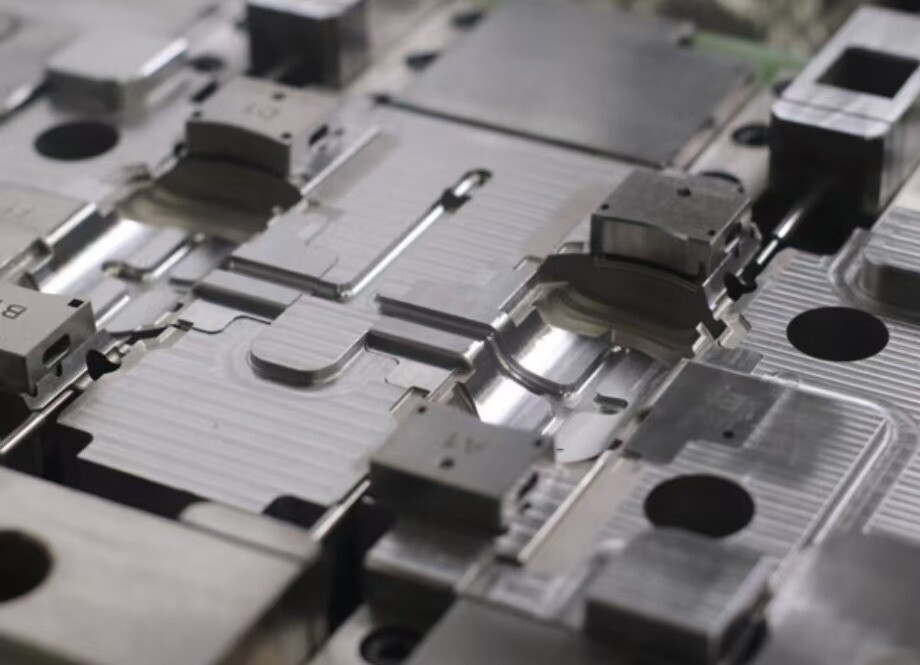
1. Parting Line and Venting System Design
The parting line must be designed to facilitate smooth demolding while minimizing flash. Given the high fluidity of LSR, the mating accuracy of parting surfaces must be extremely stringent. Concurrently, a sufficient and precisely engineered venting system is essential. Vent channels with a depth of 0.001–0.003 inches are typically employed to enable efficient air evacuation, preventing short shots, burn marks, or internal voids caused by trapped air—particularly critical for thin-walled and structurally complex parts.
2. Cold Runner System and Temperature Control
To reduce material waste, LSR injection molding commonly adopts cold runner systems. The runner design must ensure minimal pressure loss and balanced filling, while maintaining the LSR at an appropriate temperature (typically cooled) within the runner during injection intervals to prevent premature curing. The mold heating system must deliver high uniformity and stability, often utilizing high-precision oil-based temperature controllers or multi-zone independently controlled heating cartridges to maintain mold temperature within ±2°C of the setpoint—this is a prerequisite for ensuring consistent curing reactions.
3. Surface Treatment and Detail Machining
Mold steel surfaces in contact with LSR generally require high-grade polishing or coating treatments (e.g., nickel-PTFE plating) to achieve superior release performance and replicate high-gloss or specified textured surfaces. For fine features (such as micro-holes or thin ribs), precision micro-machining techniques (e.g., micro-EDM) are necessary to guarantee dimensional and geometric accuracy.
II. Core Process: Precision Control of Injection Molding Parameters
1. Metering and Mixing Accuracy
As LSR is a two-component material, its A and B constituents must be delivered continuously and consistently via high-precision gear pumps at a 1:1 ratio, achieving absolute homogeneity through static mixers. Minor deviations in metering ratios or inadequate mixing directly lead to localized under-curing or compromised physical properties. This stage must be fully automated and subject to stable monitoring.
2. Dynamic Control During Injection
Temperature: The barrel must be effectively cooled (typically 20–40°C) to prevent pre-curing of the compound prior to injection.
Speed and Pressure: Multi-stage injection control is employed. High-speed injection is used initially to rapidly fill the main cavity, switching to low speed near the end of filling and when encapsulating inserts to ensure adequate venting, avoid air entrapment, and protect fragile inserts. Injection pressure is typically significantly lower than in thermoplastic injection molding.
Position and Switchover: The transition from injection to holding pressure (VP switch) should be triggered based on precise screw position or cavity pressure, which is critical for controlling product dimensions and weight.
3. Scientific Management of Curing
LSR undergoes an irreversible cross-linking reaction in the heated mold. Curing time is a core parameter, dependent on the compound formulation, the temperature at the thickest section of the part, and the mold temperature. Insufficient curing time results in "under-cured" products with subpar performance, while excessive time reduces production efficiency. Scientific curing management requires determination of the optimal time based on material supplier data and practical process validation.
III. Back-End Assurance: Post-Molding Processing and Full-Process Quality System
1. Automated Post-Processing and Cleanliness
After mold opening, parts are typically extracted by robots or automated systems to avoid contamination from manual handling. For medical or optical components with stringent cleanliness requirements, deburring, inspection, and packaging must be conducted in a controlled cleanroom environment. Temperature and humidity control in the production environment also indirectly influences product stability.
2. Full-Process Integration and Data Monitoring
True "full-process control" relies on deep integration and data-driven monitoring across all stages. From the Design for Manufacturing (DFM) phase, involving thorough communication with clients and material suppliers, to real-time monitoring and recording of key process parameters (such as mold temperature, injection speed, holding pressure, and curing time) during production, a traceable, optimizable, and replicable closed-loop system is established. This not only ensures batch-to-batch consistency but also provides a basis for rapid troubleshooting and problem resolution.
Conclusion
The success of LSR precision injection molding does not hinge on any single outstanding step but results from the deep integration of "precision mold design," "stable process control," and "systematic management." It demands that manufacturers possess not only precision machining equipment but also profound material knowledge, process understanding, and systems engineering thinking that spans multiple stages. Only through scientific definition and stringent control of every detail—from mold to final product—can high-performance LSR precision components be consistently produced, thereby providing a solid foundation for product reliability and market competitiveness.
This article is contributed by the technical team of Gajes Mold Technology Co., Ltd., based on our practical experience in precision mold manufacturing and LSR injection molding. We specialize in providing integrated solutions—from mold development to precision injection molding—for the automotive components and high-end consumer electronics industries.
office@gajesim.com
Whatsapp:+8619198137646
Gajes Mold Technology Co., Ltd.

Navigation
Get Quote