
Invisible Engineering: The Core Logic Behind Plastic Product Structure
1. Materials and Thickness
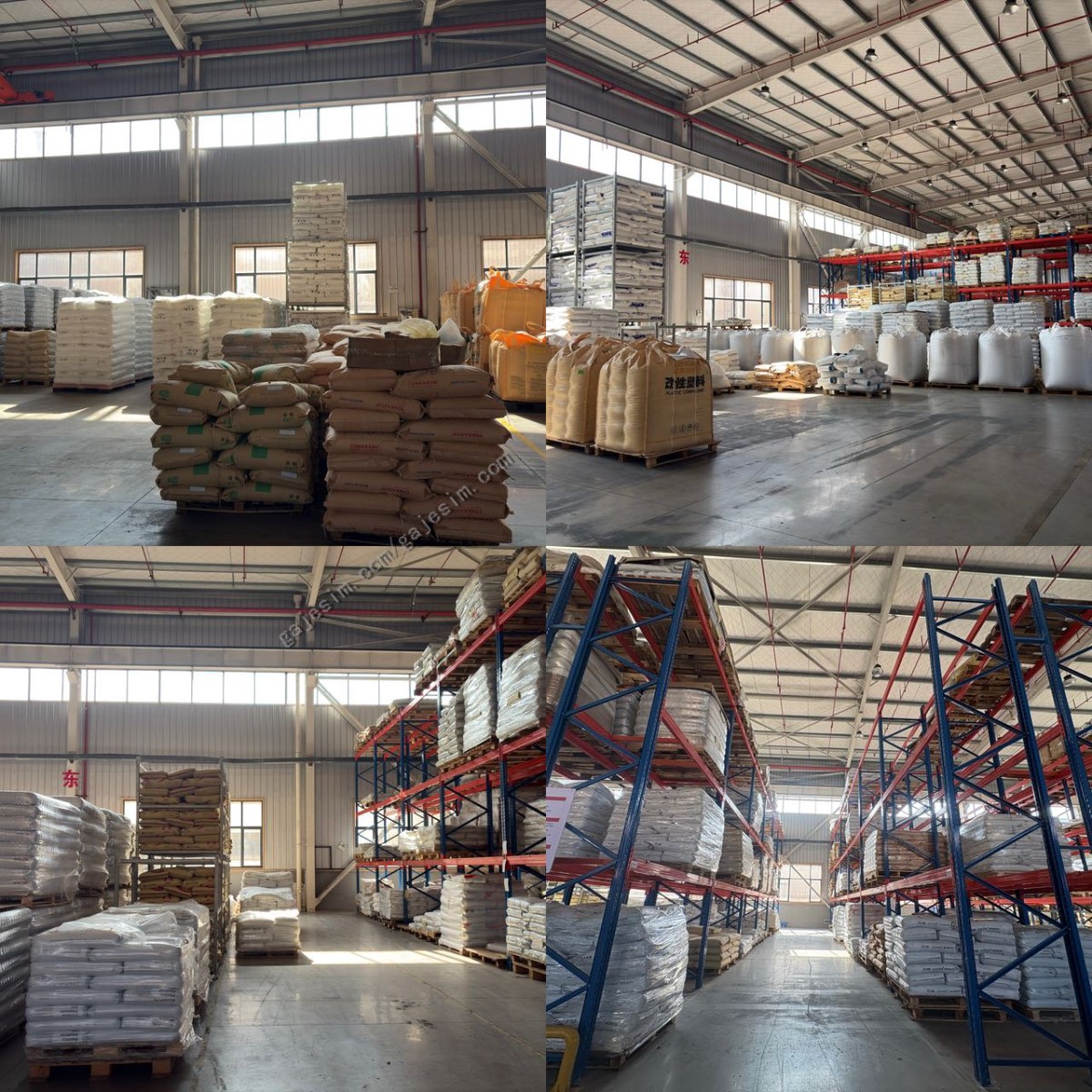
1.1 Material Selection
a.ABS: High fluidity, inexpensive, suitable for components with relatively low strength requirements (components not directly subjected to impact or structural durability tests in reliability testing),
such as internal support frames (keyboard brackets, LCD brackets), etc. It is also commonly used in electroplated components (such as buttons, side buttons, navigation keys, electroplated decorative parts, etc.).
b.PC+ABS:It has good fluidity, decent strength, and a moderate price. Suitable for making components requiring high rigidity and high impact toughness, such as frames and shells.
c.PC:High strength, expensive, poor flowability. Suitable for applications requiring high strength, such as housings, buttons, transmission frames, and lenses.
d.POM:It possesses high rigidity and hardness, excellent fatigue and wear resistance, low creep and water absorption, good dimensional and chemical stability, and good insulation properties. It is commonly used in pulleys, transmission gears, worm gears, worm shafts, and transmission mechanism components.
e.PA:It is tough and absorbent, but becomes brittle once the moisture has completely evaporated. It is commonly used in critical gears such as gears and pulleys that are subjected to high impact forces, and requires the addition of filler.
f.PMMA:It has excellent light transmittance, still allowing 92% of sunlight to pass through after 240 hours of accelerated light aging, and 89% of sunlight to pass through outdoors after ten years, with 78.5% of ultraviolet rays. It has high mechanical strength, some cold resistance and corrosion resistance, good insulation properties, dimensional stability, and is easy to mold. However, it is relatively brittle and is often used for transparent structural components with certain strength requirements, such as lenses, remote control windows, and light guides.
Of course, these examples are only a part of the list; Gajes Mold will recommend materials based on your specific needs.
1.2 Shell thickness
a.The wall thickness should be uniform, with the difference in thickness controlled within 25% of the basic wall thickness. The minimum wall thickness of the entire component must not be less than 0.4mm, and the back side of this area must not be a Class A surface, and the area must not exceed 100mm².
b.The thickness of the shell in the thickness direction should be 1.2-1.4㎜ as much as possible, and the side thickness should be 1.5-1.7 mm; the thickness of the outer lens support surface should be 0.8 mm, and the thickness of the inner lens support surface should be at least 0.6㎜.
c.The battery cover wall thickness is 0.8-1.0㎜.
d.The minimum wall thickness and recommended values for common wall thicknesses of plastic products are shown in the table below.
Minimum wall thickness and recommended values for commonly used wall thicknesses of plastic products (unit: ㎜)
1.3Thickness Design Examples
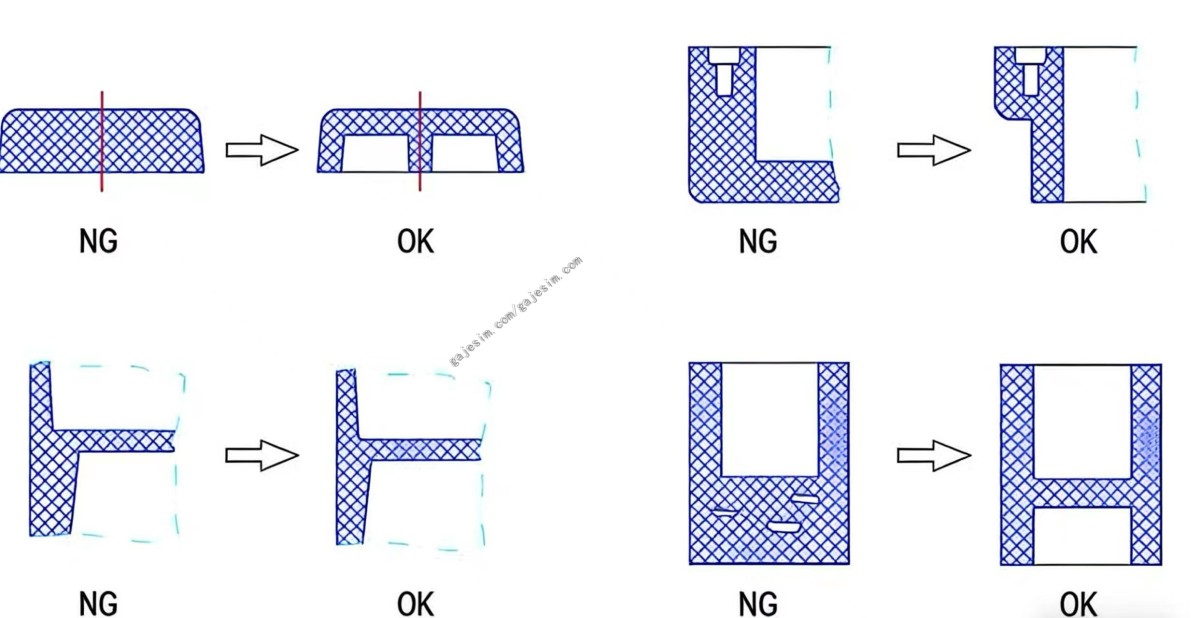
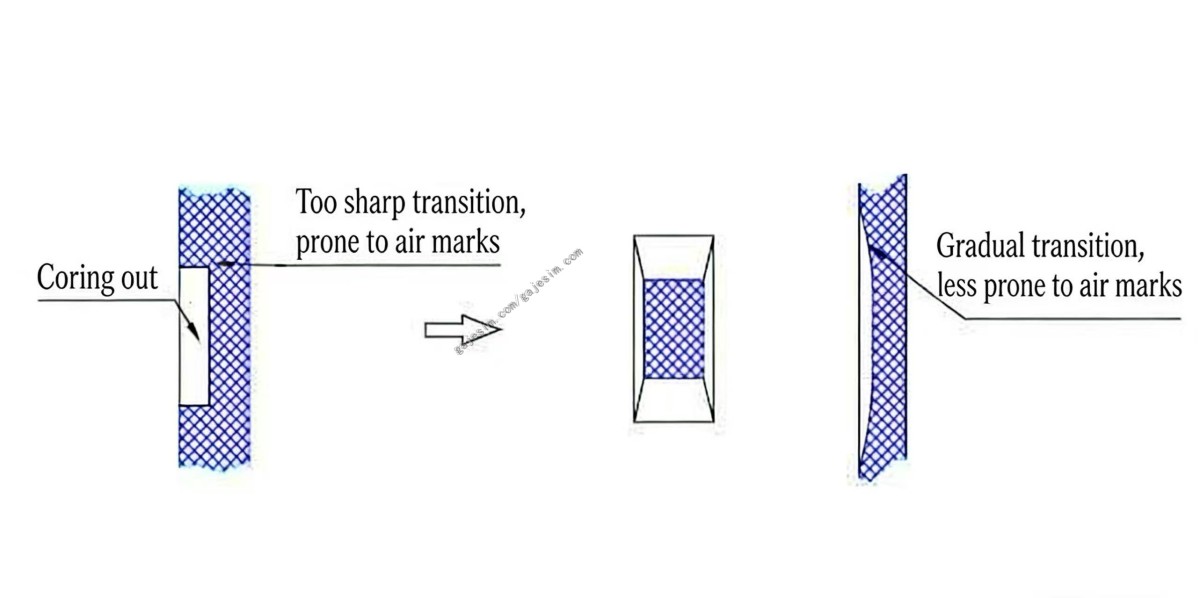
The molding process and usage requirements of plastics impose significant limitations on the wall thickness of plastic parts. Excessive wall thickness not only increases costs due to excessive material usage but also creates difficulties in the process, such as extending molding time (hardening or cooling time). This is detrimental to production efficiency and easily leads to bubbles, shrinkage cavities, and sink marks. Conversely, insufficient wall thickness results in high flow resistance of the molten plastic in the mold cavity, especially for complex or large parts, making molding difficult. Furthermore, the thinner the wall, the lower the part's strength. While ensuring sufficient wall thickness, uniform wall thickness is also crucial. Otherwise, uneven shrinkage during molding and cooling will cause not only bubbles, sink marks, and warping but also significant internal stress within the part. When designing plastic parts, sharp angles should be avoided at the junctions of thick and thin walls; the transition should be gentle, and the thickness should gradually decrease along the direction of plastic flow.
2. Draft angle
2.1.Key points of draft angle
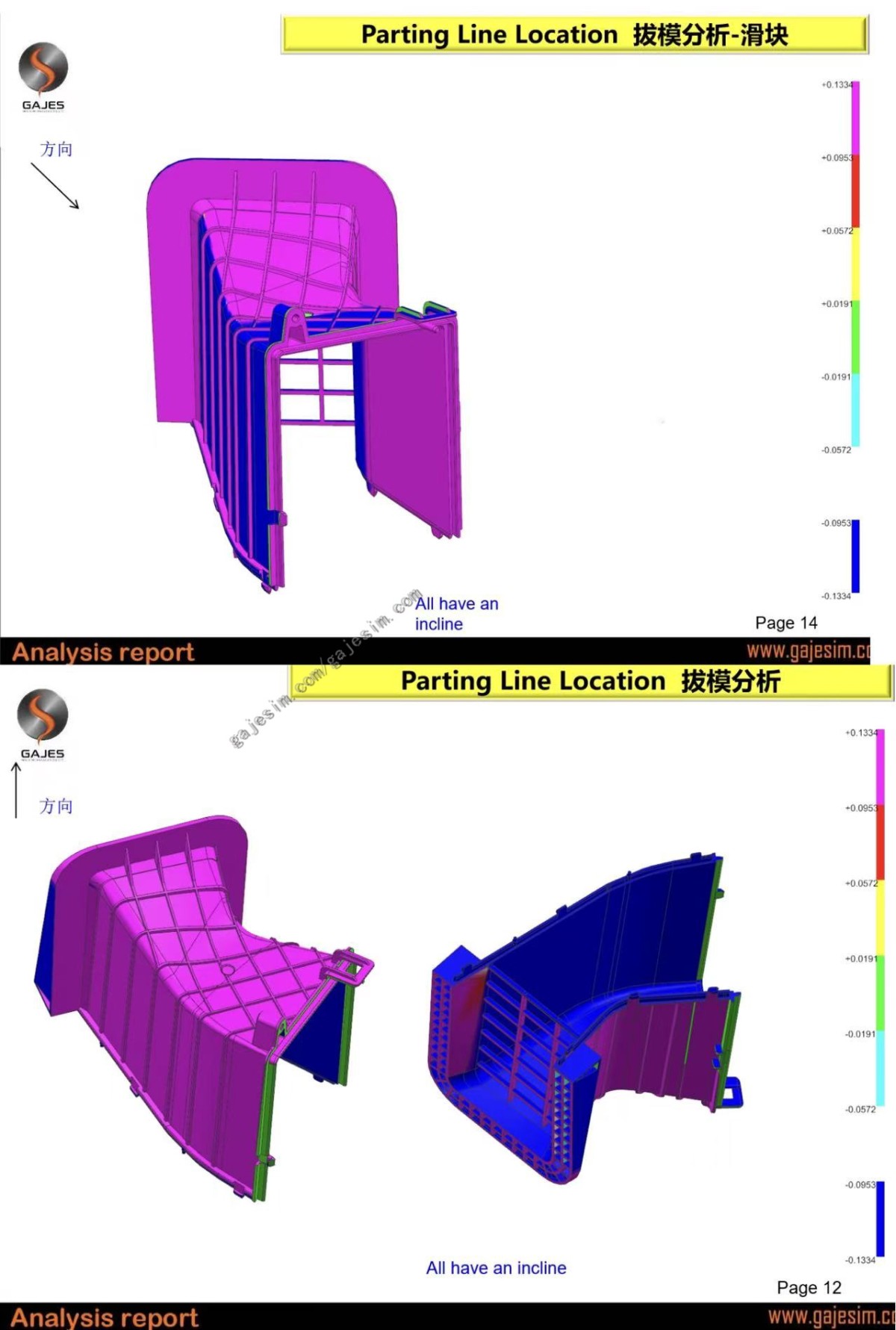
There are no fixed rules for the size of the draft angle; it is mostly determined by experience and the depth of the product.
In addition, the molding method, wall thickness, and choice of plastic are also taken into consideration. Generally speaking,
a certain draft angle is required for any side wall of a molded product to facilitate removal from the mold.
The size of the draft angle can vary from 0.2° to several degrees,
depending on the surrounding conditions, with 0.5° to 10° generally considered ideal. When selecting the specific draft angle, the following points should be noted:
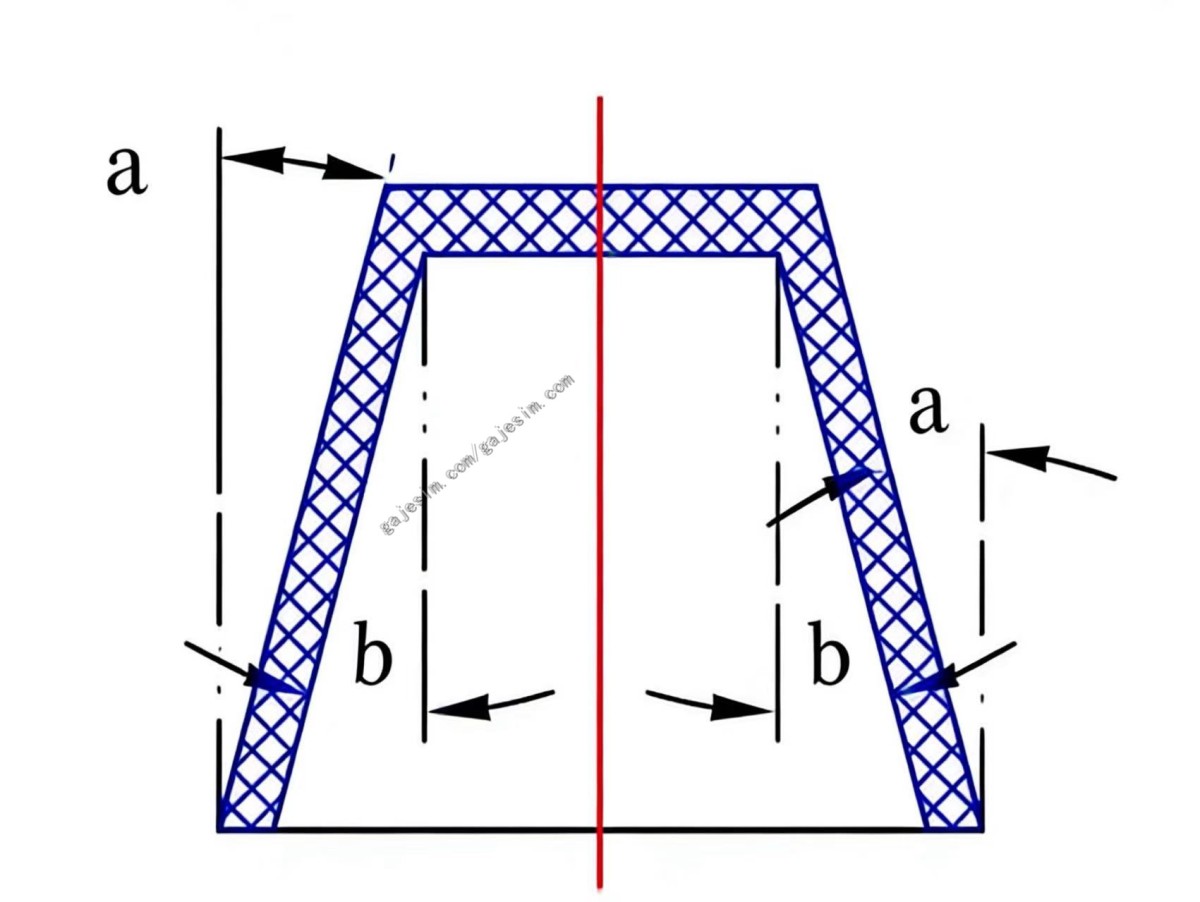
a. The direction of the draft angle: For internal holes, the smaller end is used as the reference point; if conforming to the drawing, the draft angle is obtained from the direction of expansion.
For external holes, the larger end is used as the reference point; if conforming to the drawing, the draft angle is obtained from the direction of contraction.
b.For plastic parts requiring high precision, a smaller draft angle should be selected.
c.For taller or larger dimensions, a smaller draft angle should be selected.
d.For plastic parts with a high shrinkage rate, a larger draft angle value should be selected.
e.When the wall thickness of the plastic part is relatively thick, the molding shrinkage will increase, so a larger draft angle should be used.
f.Generally, draft angle is not included in the tolerance range of plastic parts.
g.For transparent parts, the draft angle should be increased to prevent scratches. Generally, the draft angle for PS material should be greater than 3°, and for ABS and PC material, it should be greater than 2°.
h.For plastic parts with textured or sandblasted finishes, a 3°-5° draft angle should be added to the sidewalls, depending on the specific texture depth. The required draft angle is usually clearly shown on the texture template for reference. The deeper the texture, the larger the draft angle should be. The recommended value is 1° + H/0.02540 (where H is the texture depth). For example, a 3° draft angle is generally used for a texture like 121.
i.The draft angle of the insertion surface is generally 1°30
j.The draft angle of the outer shell surface is greater than or equal to 3°
k.Except for the outer shell surface, the standard draft angle for all other features of the shell is 1°. Alternatively, the following principles can be followed: 0.5° for reinforcing ribs less than 3mm high, 1° for ribs 35mm high, and 1.5° for the rest; 0.5° for cavities less than 3m high, 1° for cavities 35mm high, and 1.5° for the rest.
3. Reinforcing Ribs
To ensure the strength and rigidity of plastic parts without increasing wall thickness, reinforcing ribs are added at appropriate locations. This not only prevents deformation but,
in some cases, can also improve plastic flow during molding.
To increase the strength and rigidity of plastic parts, it is preferable to increase the number of reinforcing ribs rather than increasing their wall thickness.
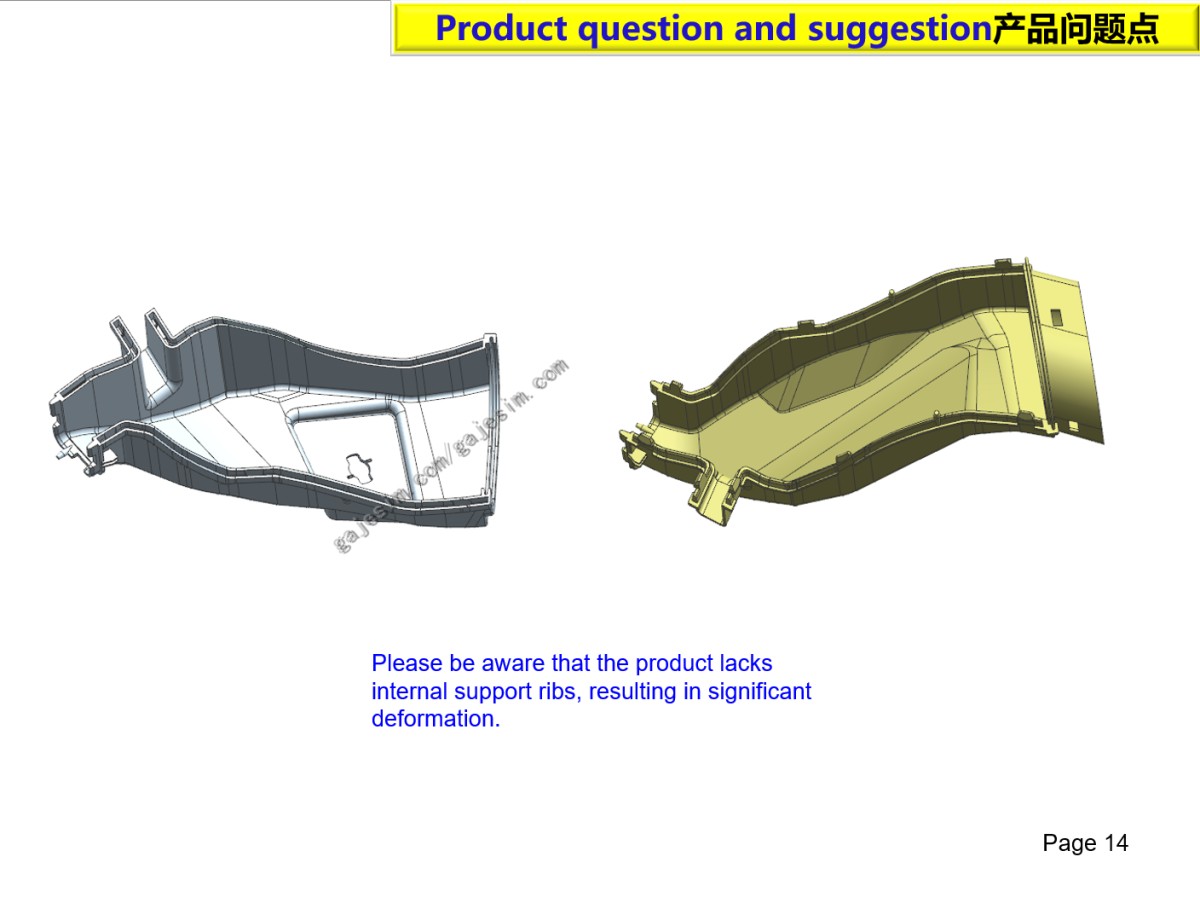
3.1 Example of stiffener design
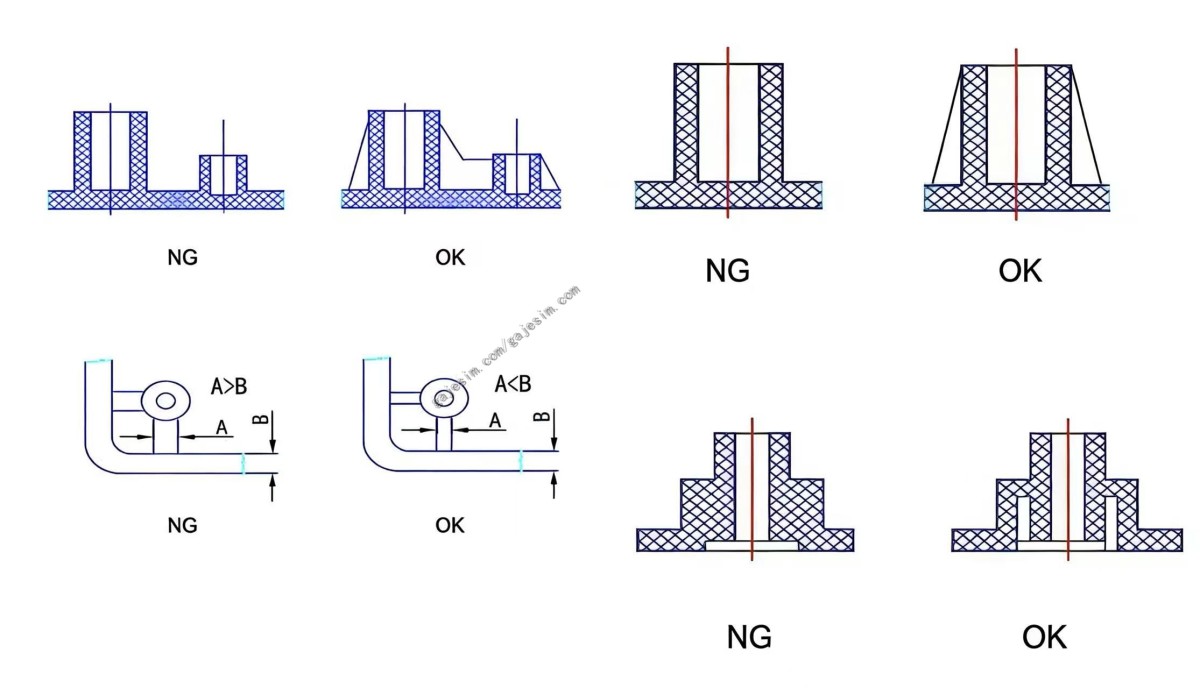
4. Issues with Columns and Holes
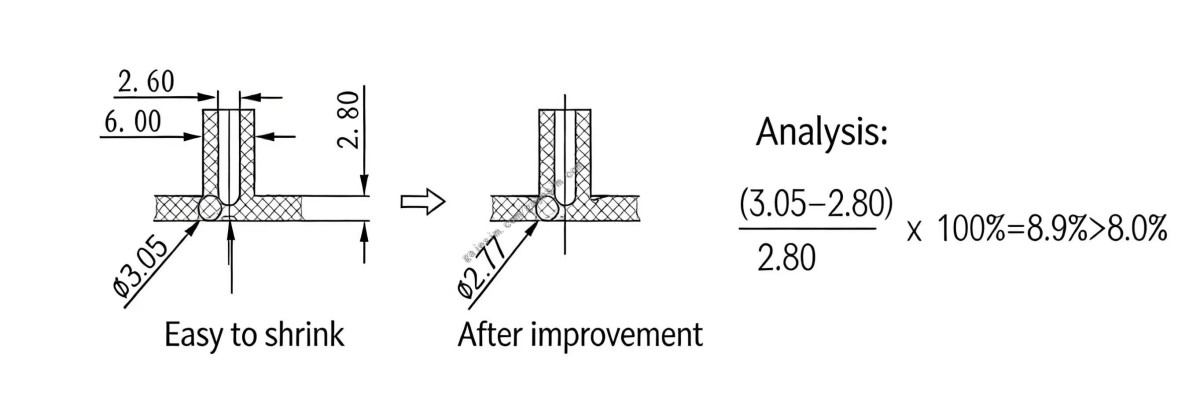
4.1. Issues with Columns
a. When designing columns, the shrinkage potential of the adhesive area should be considered.
b. To increase the strength of the column, additional reinforcing ribs can be added around the column.See the diagram below.
4.2 Hole Issues
a. The distance between holes should generally be at least twice the hole diameter.
b. The distance between a hole and the edge of the plastic part should generally be at least three times the hole diameter. If the hole is limited by the design of the plastic part or is used for fixing,
a boss can be used to reinforce the edge of the hole.
c. The design of side holes should avoid thin-walled sections, otherwise sharp corners will be created, which may cause injury and material shortage.
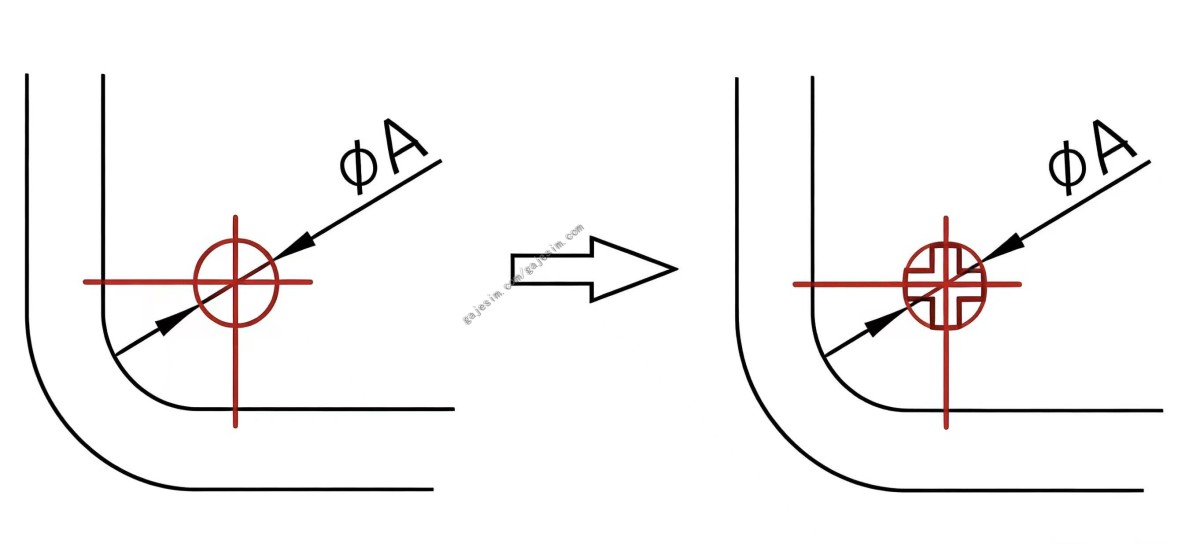
4.3 The problem of "Coring out"
5. Design of screw posts
5.1 The two housings are usually fixed by screws and clips, and the screw posts usually also serve to position the PCB board.
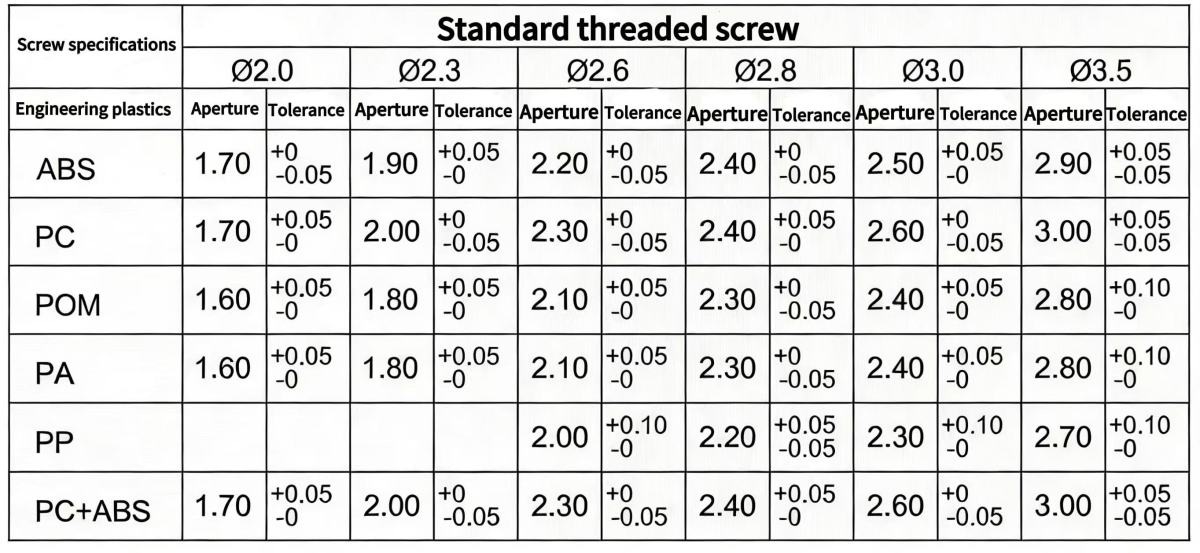
5.2 The design principle for the stud of a self-tapping screw is that its outer diameter should be 2.0-2.4 times the outer diameter of the screw. Figure 6-2 shows the dimensional relationship between the M1.6x0.35 self-tapping screw and the stud. In the design, the following can be taken: stud outer diameter = 2 x screw outer diameter; stud inner diameter (ABS, ABS+PC) = screw outer diameter - 0.40 ㎜; stud inner diameter (PC) = screw outer diameter - 0.30㎜ or -0.35㎜ (it can be designed as 0.30 mm first, and the mold can be modified and glued if the test fails); the distance between the stud surfaces of the two shells is 0.05㎜.
5.3 The design values for screw post holes of different materials and screws are shown in the table below.
Excellence in design is often hidden within the "invisible" details. By precisely mastering core logic such as wall thickness, draft angles, and reinforcing ribs, we are not just solving engineering puzzles—we are creating higher added value for the product. Gajes Mold is committed to transforming these complex "Invisible Engineering" principles into visible quality advantages, creating industry benchmarks for you that are structurally sound, aesthetically pleasing, and cost-competitive.
office@gajesim.com
WhatsApp:+8619198137646
Tel.+8619198137646
Gajes Mold Technology Co., Ltd.
Navigation
Get Quote